The right way to plant a vanilla cutting
Often you’ll hear to plant the vine in the pot. I don’t recommend this. Also, for long term success, do not use soil alone.
In its native environment, vanilla vines will break and fall to the ground. Then they grow across the ground until they find something to climb. They can have both subterranean roots and aerial roots.
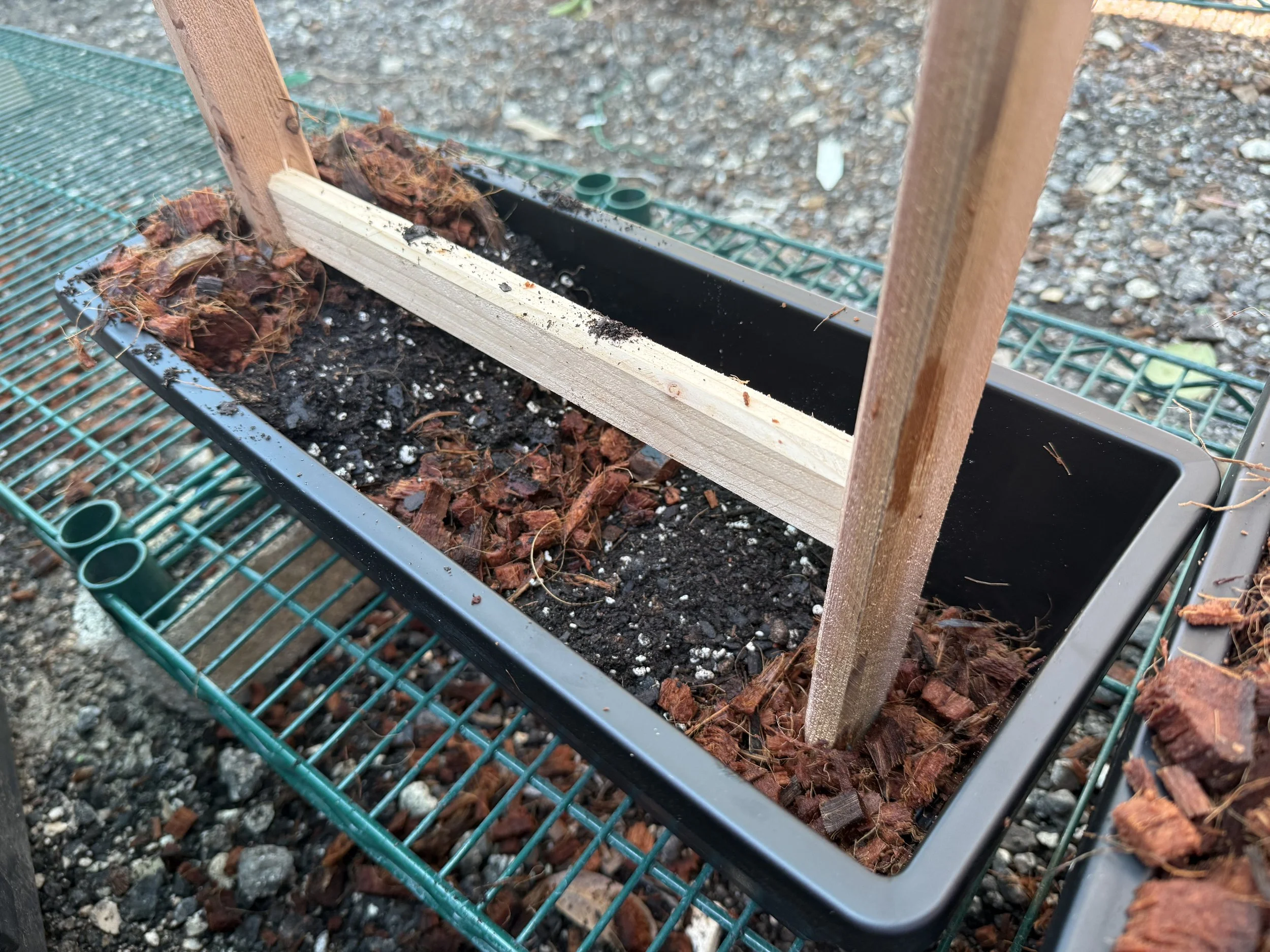
Soil substrate needs to drain really well above all else. This is what I recommend: 1:1 ratio of soil and coarse coconut husk chunks. Some species benefit from adding certain rocks into the mix, like lava rock or limestone. My go to soil is called Happy Frog by FoxFarm because it already has generous amounts of perlite and organic food.
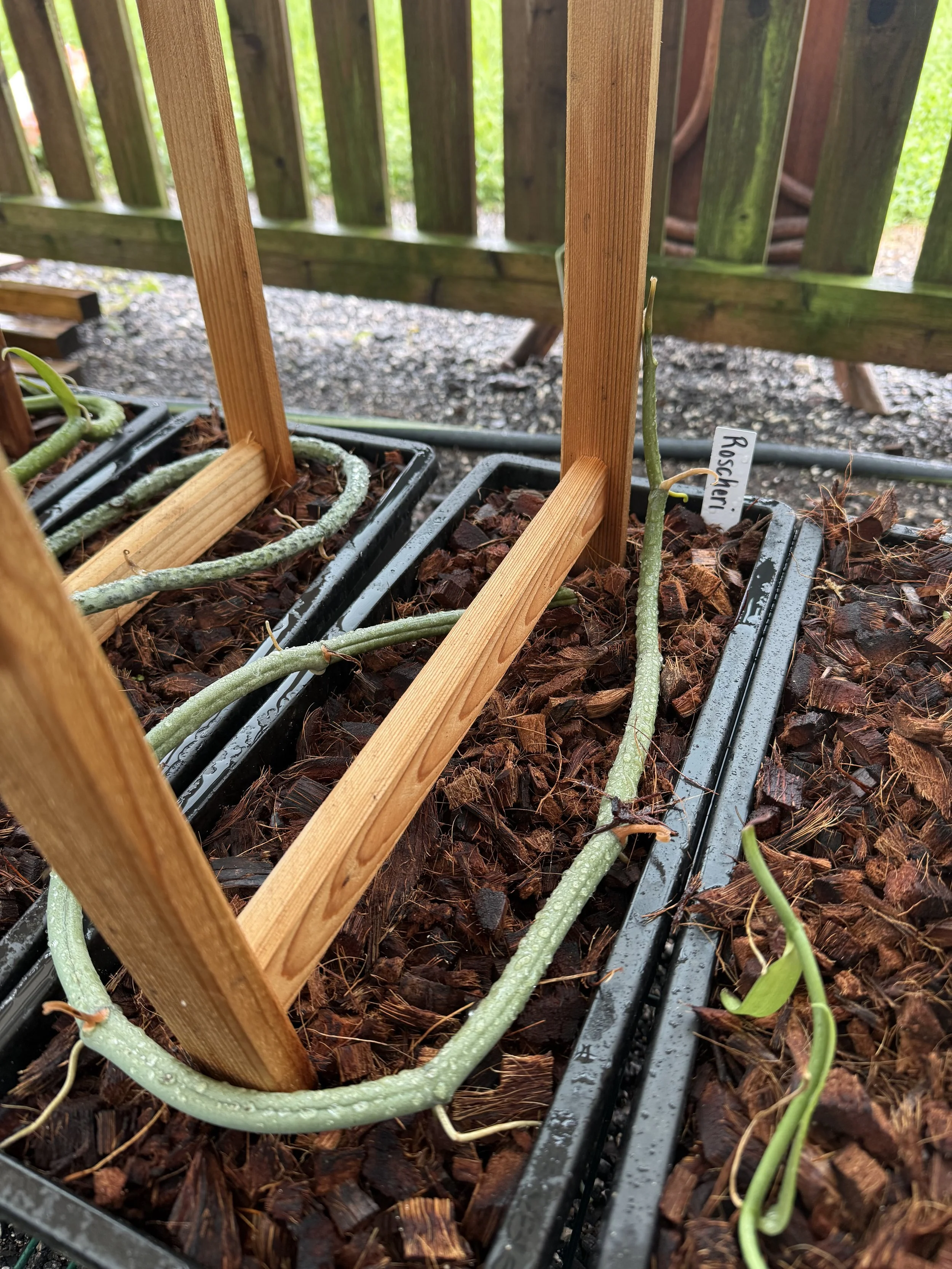
I add a top layer of coarse coconut husk before I plant the vine, so that the vine doesn’t touch and soil.
Install your trellis. You will need a trellis no matter the species. This can be as basic as a few cedar sticks but I recommend a ladder or lattice.
To “plant” a vanilla orchid cutting, you want to lay you cutting across the top of your coconut husk topping, and add small layer of moss or peat around the vine. This small layer shouldn’t cover the top surface of the vine. If your cutting doesn’t want to lay flat, you can use temporary landscaping pins to hold the vine, be careful not to press the metal into the plant tissue.
Move your newly planted vanilla cutting into shady spot. And your done.
I recommend misting 2 times per day until you see the roots dive into the soil. For the fastest results, keep in a humid environment and away from any direct sunlight. You can expect to see the roots dive into as little as a week, or as long as a month. However what really determines how fast your cutting will root, outside of misting, is how thick the vine is. Thicker vines grow faster at every stage. If you get your cutting from our online store, you can be assured to get thick cutting from a mature vine. When you get a skinny cutting, you should expect to wait 3 years for your first flower (species dependent). However a thick cutting from a mature vine will often flower within a year.
If you live in zones 10-12, you can grow your vines outdoors year round. However if your zone 9b or lower, you will need a plan in place to provide supplement heat to your vine or move it indoors. There are a few varieties that can naturally handle zone 9.
This is a general guide, based off my experience in plant city Florida, zone 9b. Please research specific to your area for optimal success