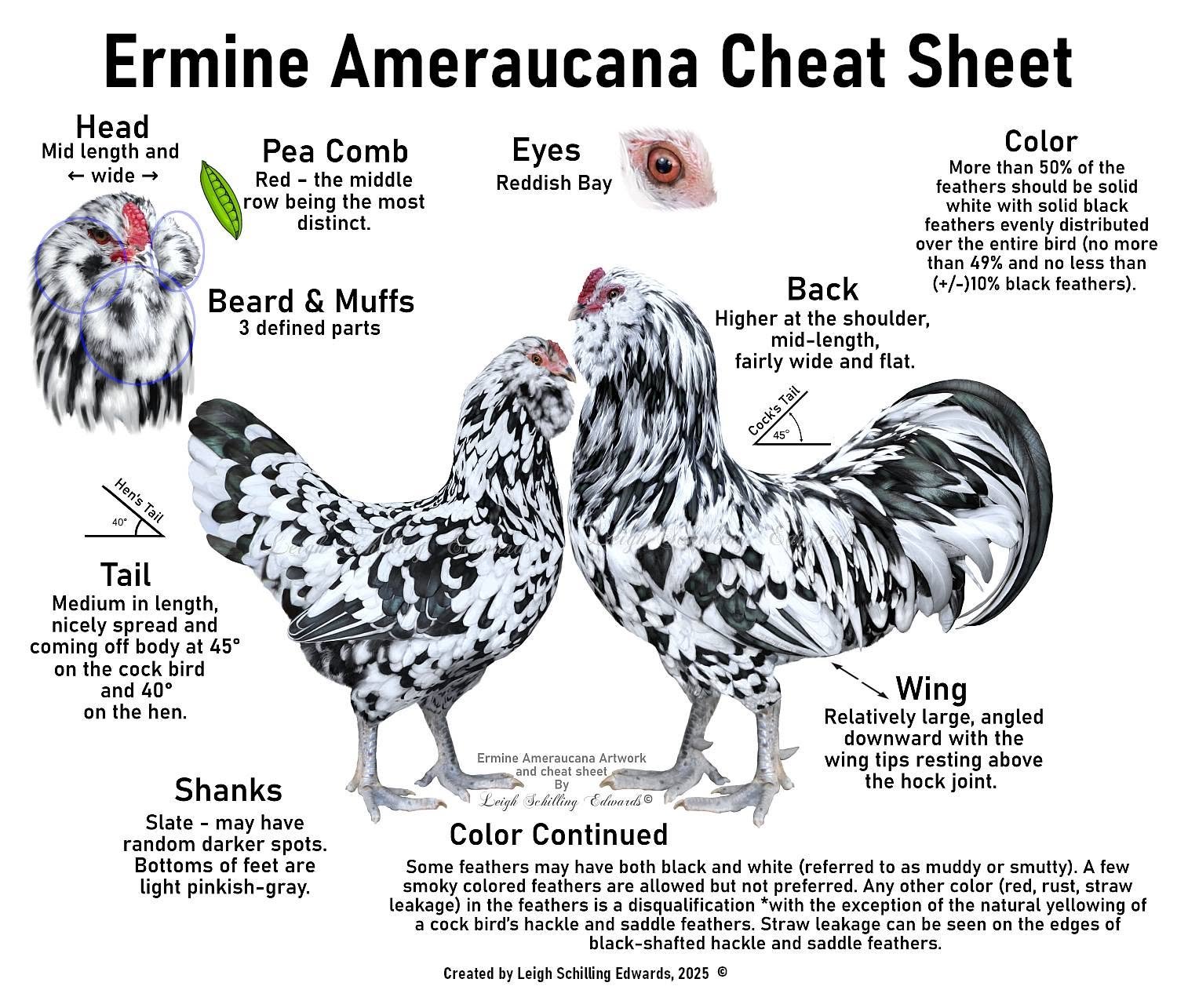
The Ermine Ameraucana: A Deep Dive into History and Genetics
The Ermine Ameraucana: A Deep Dive into History and Genetics
Today, we are taking a deep dive into one of the most visually striking and genetically fascinating project varieties in the heritage poultry world: the Ermine Ameraucana.
With their signature muffs, beards, and ability to lay beautiful blue eggs, Ameraucanas have been a favorite since they were accepted into the American Poultry Association's (APA) Standard of Perfection in 1984. But the Ermine variety brings something entirely unique to the flock.
The Origins of the Ermine Pattern
The Ameraucana breed itself was developed in the United States in the 1970s, derived from Araucana chickens brought from Chile, specifically bred to retain the blue-egg gene while eliminating the lethal alleles of the parent breed.
The story of the Ermine coloration, however, goes back much further. The Dominant White mutation responsible for the Ermine pattern was first recorded in the 1860s in poultry brought over from the West Indies. Fascinated by how this coloration behaved differently than other poultry genetics, early enthusiasts developed the American Erminette.
Modern Ermine Ameraucanas are largely the result of dedicated line breeding. Most breeders today work with foundation lines developed over 14 years by Becky Pelton of Dusty Bugs Poultry. Through careful selection and an eventual proposed standard submitted to the APA, Pelton's work brought the Ermine Ameraucana into the spotlight at recognized shows.
Understanding the "Non-Pattern"
What makes the Ermine Ameraucana so unique is that the Ermine look is not actually a feather pattern at all (unlike lacing or penciling).
Instead, it is the result of a codominance factor. The Ermine coloration is caused by a Dominant White gene that actively blocks all but a percentage of black pigment from showing. Lesser-understood gene modifiers dictate exactly how much of that black is allowed to "leak" or break through the white.
Because this is a genetic block rather than a structural feather pattern, the black breakthrough doesn't just happen on the feathers. Anywhere the black breaks through, the skin itself will be black, which is why high-quality Ermines often feature noticeably spotted shanks and beaks.
The Genetics of Breeding Ermines
For breeders looking to establish or refine their lines, understanding the genotype of the Ermine is critical. The color expression relies on two alleles:
EE: The genotype for extended black.
II: The genotype for dominant white.
EI: The heterozygous genotype for the Ermine Ameraucana.
Because Ermine (EI) is a co-dominant project variety, breeding them requires strategic pairings to yield the desired phenotype. When calculating outcomes, the math works out elegantly:
Ermine + Ermine = 25% Black, 25% Dominant White, 50% Ermine
Black + Ermine = 50% Black, 50% Ermine
Ermine + Dominant White = 50% Dominant White, 50% Ermine
Black + Dominant White = 100% Ermine
Many breeders prefer the Ermine-to-Black pairing to build quality, type, and vigor into the line, crossing an Ermine with a standard-bred solid Black Ameraucana. However, Ermine-to-Ermine pairings are actively used, provided both birds have strong foundational genetics, though breeders must watch for "muddy" patterning where gene modifiers block too much black, resulting in tiny, flecked spots rather than distinct black and white feathers.