 Image 1 of 2
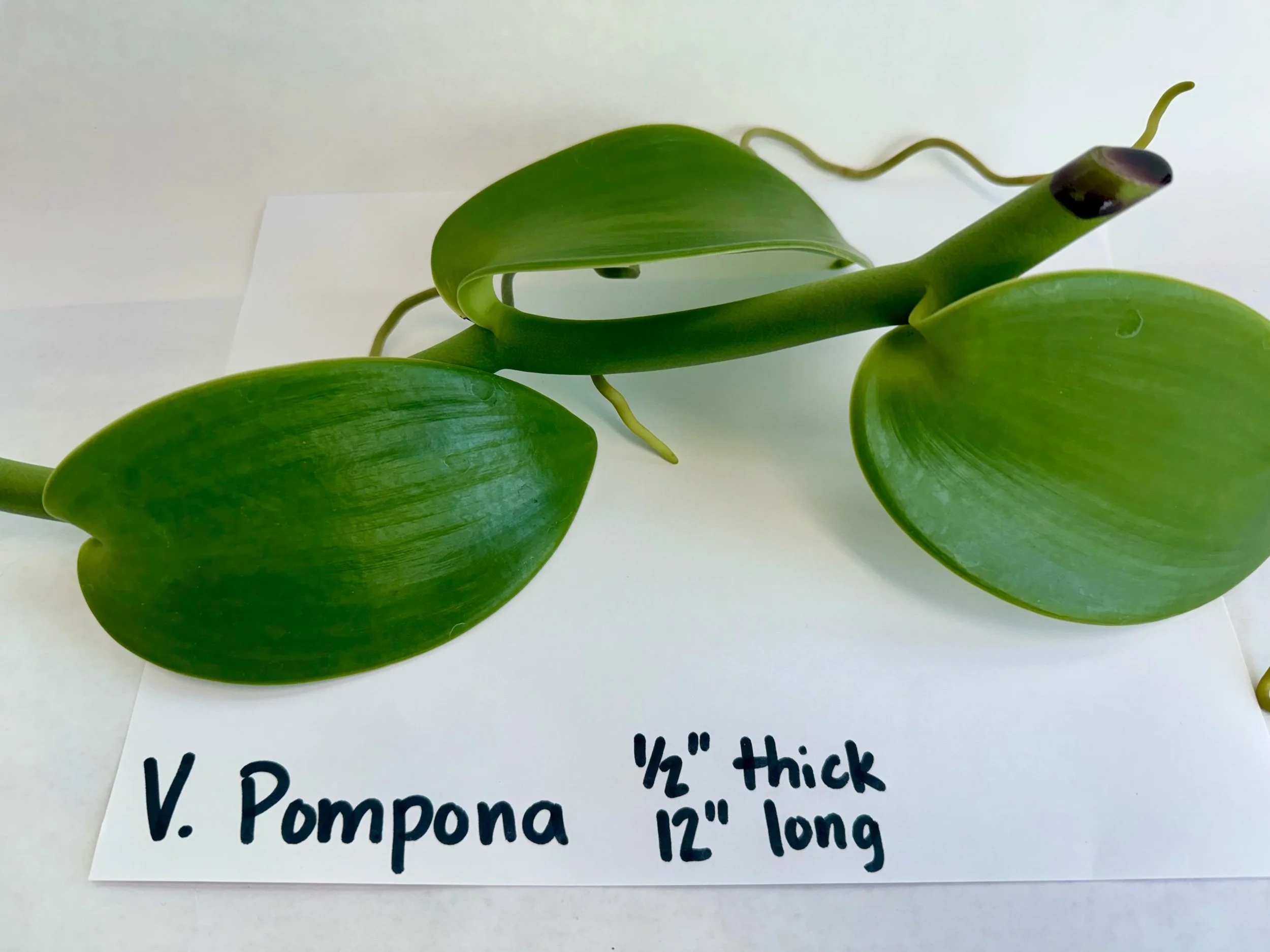 Image 2 of 2
Vanilla Pompona
A 3 node cutting of a Vanilla pompona vine.
Vanilla Pompona (West Indian Vanilla)
Make a bold, fragrant statement in your tropical garden or greenhouse. Vanilla pompona, often known as West Indian or Guadeloupe Vanilla, is a massive, vigorous climbing orchid. Prized for its oversized foliage, spectacular yellow blooms, and unique, heavily perfumed beans, it is an essential addition for collectors who want to grow one of the rarest commercial vanilla species.
A Botanical Curiosity: Brief History
Native to the lowland tropical forests of Mexico, Central America, and northern South America, Vanilla pompona was cultivated by indigenous peoples alongside its more famous relative, Vanilla planifolia, long before European contact. It was eventually introduced to the Caribbean, particularly Guadeloupe and Martinique, where it earned its common names.
While V. planifolia became the culinary standard for its classic creamy vanilla flavor, V. pompona took a different path. Its beans contain distinct aromatic compounds-most notably heliotropin-giving them a sweet, floral, almost cherry- or licorice-like fragrance. Because of this unique profile, it has historically been highly sought after by the luxury perfume and cosmetics industries, though adventurous pastry chefs are increasingly seeking it out today for its complex, fruity notes.
Plant Anatomy
The Vine
If Vanilla planifolia is a classic vine, Vanilla pompona is a giant. It is an incredibly vigorous, heavy monopodial climber featuring exceptionally thick, fleshy green stems. Its leaves are noticeably larger, broader, and more ovate (egg-shaped) than standard commercial vanilla, often measuring up to 11 inches long. As it rapidly scales tree trunks or large trellises, it sends out robust, thick aerial roots at every node to anchor its immense weight and pull moisture from the humid air.
The Flower
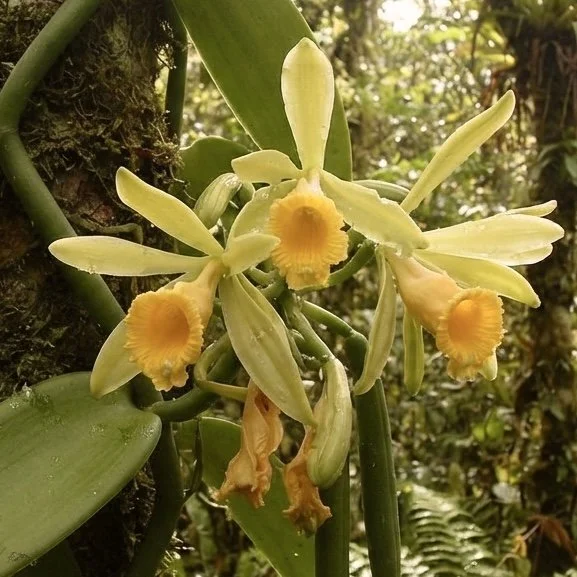
The flowers of Vanilla pompona are among the most spectacular in the vanilla genus. They are distinctly larger and more brightly colored than standard vanilla, featuring brilliant yellowish-green to vibrant yellow sepals and petals. The centerpiece is a prominent, deeply ruffled, tubular lip that is beautifully crest-lined and intensely fragrant. Like other vanillas, these stunning blooms are highly ephemeral, typically opening in the morning and closing permanently by late afternoon.
The Bean
The seed pods of Vanilla pompona are unmistakable. When successfully pollinated, the flower yields a pod that is noticeably shorter, thicker, and more triangular than the slender beans of V. planifolia—often earning them the nickname "banana vanilla." Because of their immense thickness, these pods require a highly specialized, extended curing process to properly develop their sweet, floral, and perfume-like aromatic compounds without spoiling.
Growing & Care Instructions
Because of its massive size and rapid growth rate, Vanilla pompona requires ample space, incredibly sturdy support, and plenty of warmth to thrive.
Light: Provide bright, dappled sunlight or filtered canopy shade. It needs strong, indirect light to fuel its immense growth and trigger blooming, but direct midday sun will quickly scorch the massive, fleshy leaves.
Support (The Host): Do not underestimate the weight of this vine. Flimsy bamboo stakes will snap under a mature plant. Provide a heavy-duty support structure such as a thick hardwood post, a concrete pillar wrapped in coco coir, or a large, living shade tree.
Water & Humidity: Keep the growing medium consistently moist during the active growing seasons (spring and summer), allowing only the top layer to dry out before watering again. It thrives in high ambient humidity-ideally between 75% and 85%-which keeps the thick aerial roots plump and active.
Potting Medium: Start the terrestrial base in a rich, highly aerated, fast-draining epiphytic mix. A blend of coarse orchid bark, perlite, and a generous amount of high-quality compost or humus perfectly supports its heavy-feeding nature while ensuring vital root airflow.
Temperature: This is a strictly tropical, heat-loving species. It flourishes in temperatures between 75F and 90F. It can be grown outdoors year-round in USDA Zones 11-12, but must be kept in a large, heated greenhouse or warm indoor space in cooler climates. Protect it completely from temperatures below 55F.
Fertilization: Vanilla pompona is a notoriously heavy feeder. Apply a balanced, water-soluble orchid fertilizer at half strength every week or two during periods of active growth to sustain its massive vines and large foliage.
A 3 node cutting of a Vanilla pompona vine.
Vanilla Pompona (West Indian Vanilla)
Make a bold, fragrant statement in your tropical garden or greenhouse. Vanilla pompona, often known as West Indian or Guadeloupe Vanilla, is a massive, vigorous climbing orchid. Prized for its oversized foliage, spectacular yellow blooms, and unique, heavily perfumed beans, it is an essential addition for collectors who want to grow one of the rarest commercial vanilla species.
A Botanical Curiosity: Brief History
Native to the lowland tropical forests of Mexico, Central America, and northern South America, Vanilla pompona was cultivated by indigenous peoples alongside its more famous relative, Vanilla planifolia, long before European contact. It was eventually introduced to the Caribbean, particularly Guadeloupe and Martinique, where it earned its common names.
While V. planifolia became the culinary standard for its classic creamy vanilla flavor, V. pompona took a different path. Its beans contain distinct aromatic compounds-most notably heliotropin-giving them a sweet, floral, almost cherry- or licorice-like fragrance. Because of this unique profile, it has historically been highly sought after by the luxury perfume and cosmetics industries, though adventurous pastry chefs are increasingly seeking it out today for its complex, fruity notes.
Plant Anatomy
The Vine
If Vanilla planifolia is a classic vine, Vanilla pompona is a giant. It is an incredibly vigorous, heavy monopodial climber featuring exceptionally thick, fleshy green stems. Its leaves are noticeably larger, broader, and more ovate (egg-shaped) than standard commercial vanilla, often measuring up to 11 inches long. As it rapidly scales tree trunks or large trellises, it sends out robust, thick aerial roots at every node to anchor its immense weight and pull moisture from the humid air.
The Flower
The flowers of Vanilla pompona are among the most spectacular in the vanilla genus. They are distinctly larger and more brightly colored than standard vanilla, featuring brilliant yellowish-green to vibrant yellow sepals and petals. The centerpiece is a prominent, deeply ruffled, tubular lip that is beautifully crest-lined and intensely fragrant. Like other vanillas, these stunning blooms are highly ephemeral, typically opening in the morning and closing permanently by late afternoon.
The Bean
The seed pods of Vanilla pompona are unmistakable. When successfully pollinated, the flower yields a pod that is noticeably shorter, thicker, and more triangular than the slender beans of V. planifolia—often earning them the nickname "banana vanilla." Because of their immense thickness, these pods require a highly specialized, extended curing process to properly develop their sweet, floral, and perfume-like aromatic compounds without spoiling.
Growing & Care Instructions
Because of its massive size and rapid growth rate, Vanilla pompona requires ample space, incredibly sturdy support, and plenty of warmth to thrive.
Light: Provide bright, dappled sunlight or filtered canopy shade. It needs strong, indirect light to fuel its immense growth and trigger blooming, but direct midday sun will quickly scorch the massive, fleshy leaves.
Support (The Host): Do not underestimate the weight of this vine. Flimsy bamboo stakes will snap under a mature plant. Provide a heavy-duty support structure such as a thick hardwood post, a concrete pillar wrapped in coco coir, or a large, living shade tree.
Water & Humidity: Keep the growing medium consistently moist during the active growing seasons (spring and summer), allowing only the top layer to dry out before watering again. It thrives in high ambient humidity-ideally between 75% and 85%-which keeps the thick aerial roots plump and active.
Potting Medium: Start the terrestrial base in a rich, highly aerated, fast-draining epiphytic mix. A blend of coarse orchid bark, perlite, and a generous amount of high-quality compost or humus perfectly supports its heavy-feeding nature while ensuring vital root airflow.
Temperature: This is a strictly tropical, heat-loving species. It flourishes in temperatures between 75F and 90F. It can be grown outdoors year-round in USDA Zones 11-12, but must be kept in a large, heated greenhouse or warm indoor space in cooler climates. Protect it completely from temperatures below 55F.
Fertilization: Vanilla pompona is a notoriously heavy feeder. Apply a balanced, water-soluble orchid fertilizer at half strength every week or two during periods of active growth to sustain its massive vines and large foliage.