 Image 1 of 2
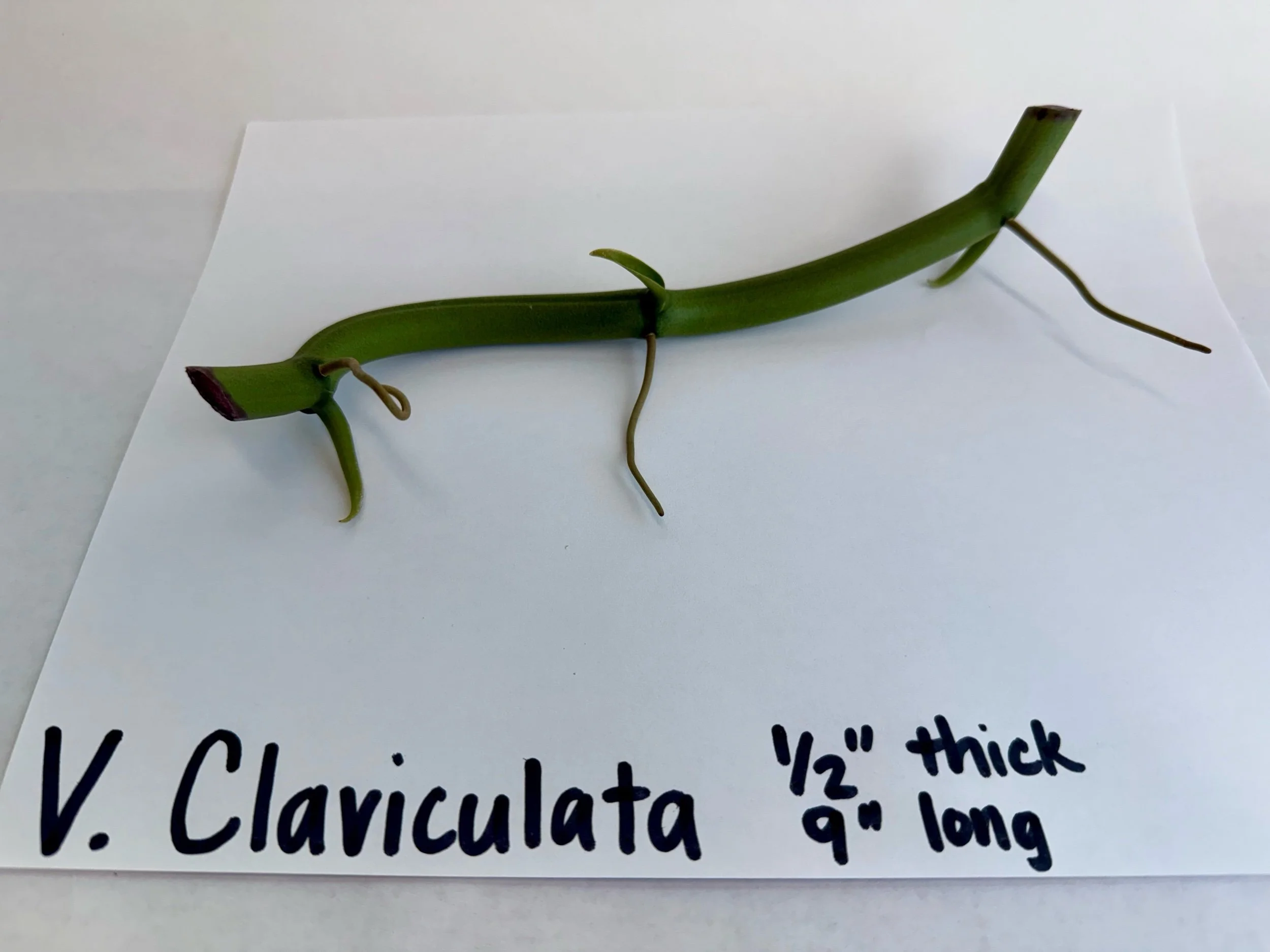 Image 2 of 2
Vanilla Claviculata
Vanilla Claviculata cutting of 3 nodes.
Vanilla Claviculata (Green Withe Orchid)
Bring home a true Caribbean botanical treasure. Vanilla claviculata is an extraordinary, highly adapted climbing orchid that challenges everything you thought you knew about tropical vines. Perfect for rare orchid collectors and tropical plant enthusiasts, this structural beauty makes a stunning conversation piece.
A Botanical Curiosity: Brief History
Native to the dry scrublands and forests of the Caribbean-including Jamaica, Cuba, Hispaniola, and Puerto Rico.Vanilla claviculata is commonly known by its local name, the "Green Withe" orchid. Unlike traditional lush, leafy jungle vines, this species has evolved a brilliant evolutionary workaround to survive in drier, harsher microclimates: it ditched its leaves.
By relying entirely on its thick, green stems for photosynthesis, the plant successfully conserves water while still scaling the canopy. Historically, the robust vines of the Green Withe were utilized in traditional Caribbean folk remedies, adding a layer of cultural history to this fascinating wild vanilla.
Plant Anatomy
The Vine
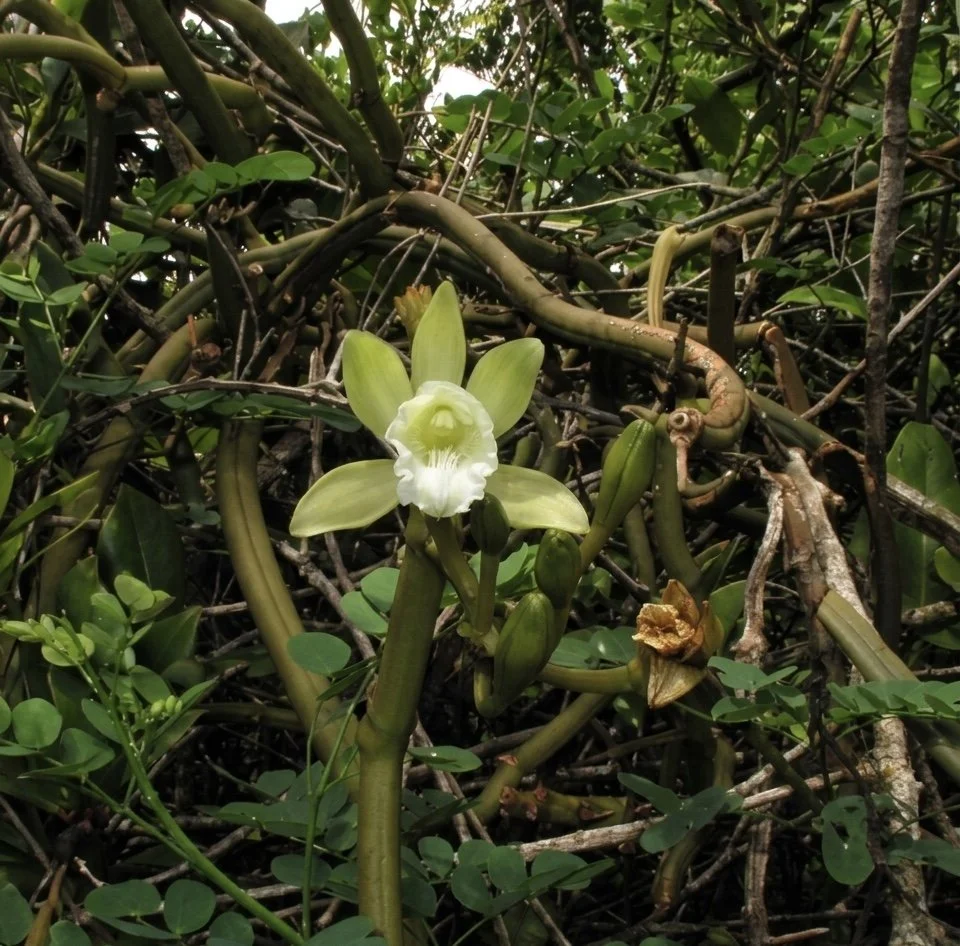
The hallmark of Vanilla claviculata is its thick, succulent, and often glaucous (slightly bluish-green) stems. It is a monopodial climber that is virtually leafless; any leaves it does produce are reduced to tiny, imperceptible scales. Instead of foliage, it pushes out strong aerial roots at each node, which it uses to tightly grip tree bark, trellises, or wooden posts as it scrambles upward toward the light.
The Flower
Like many vanilla species, the blooms of V. claviculata are ephemeral-opening in the early morning and closing forever by late afternoon. The flowers span roughly 2 inches across and feature a star-shaped arrangement of pale green to chartreuse sepals and petals. The focal point is a beautiful, tubular, ruffled lip that is predominantly stark white, designed to attract specific bees and hummingbirds in the wild.
The Bean
When successfully pollinated, the flower gives way to a fleshy, distinctive seed pod. The species name claviculata refers to the slightly clavate (club-shaped) structure of these pods. While it is not traditionally cultivated for commercial spice production like its famous cousin Vanilla planifolia, the beans do possess a mild, sweet fragrance when properly dried and cured.
Growing & Care Instructions
Growing Vanilla claviculata is a unique and rewarding experience. Because it originates in slightly drier Caribbean scrublands, it is somewhat more forgiving than hyper-tropical rainforest species, provided its basic needs are met.
Light: Provide bright, filtered, or dappled sunlight. It thrives with strong indirect light but should be protected from harsh, direct midday sun that can scorch the bare vines.
Support (The Host): This plant is a climber by nature and must be trained upward. Provide a sturdy wooden stake, a rough-barked tree fern totem, or a trellis. You will need to tie the vine loosely until its aerial roots naturally anchor to the mount.
Water & Humidity: While drought-tolerant in the wild, it performs best in cultivation with regular watering. Drench the plant thoroughly, but allow it to dry out completely between waterings, this dry cycle is essential and is known to help trigger flowering. Maintain high humidity, ideally around 80%.
Potting Medium: Plant the terrestrial base in a highly aerated, fast-draining epiphytic mix. A combination of equal parts coarse orchid bark and standard potting mix or humus works well. The pH should ideally be kept neutral (around 6.6 to 7.5).
Temperature: This is a warm-growing tropical orchid. It requires temperatures above 40°F (4.5°C) to survive, but prefers consistent warmth. It can be grown outdoors year-round in USDA Zones 10–12; otherwise, it makes an excellent greenhouse plant or indoor specimen during cooler months.
Fertilization: Feed regularly with a well-balanced, water-soluble orchid fertilizer every couple of weeks during the active growing season.
Vanilla Claviculata cutting of 3 nodes.
Vanilla Claviculata (Green Withe Orchid)
Bring home a true Caribbean botanical treasure. Vanilla claviculata is an extraordinary, highly adapted climbing orchid that challenges everything you thought you knew about tropical vines. Perfect for rare orchid collectors and tropical plant enthusiasts, this structural beauty makes a stunning conversation piece.
A Botanical Curiosity: Brief History
Native to the dry scrublands and forests of the Caribbean-including Jamaica, Cuba, Hispaniola, and Puerto Rico.Vanilla claviculata is commonly known by its local name, the "Green Withe" orchid. Unlike traditional lush, leafy jungle vines, this species has evolved a brilliant evolutionary workaround to survive in drier, harsher microclimates: it ditched its leaves.
By relying entirely on its thick, green stems for photosynthesis, the plant successfully conserves water while still scaling the canopy. Historically, the robust vines of the Green Withe were utilized in traditional Caribbean folk remedies, adding a layer of cultural history to this fascinating wild vanilla.
Plant Anatomy
The Vine
The hallmark of Vanilla claviculata is its thick, succulent, and often glaucous (slightly bluish-green) stems. It is a monopodial climber that is virtually leafless; any leaves it does produce are reduced to tiny, imperceptible scales. Instead of foliage, it pushes out strong aerial roots at each node, which it uses to tightly grip tree bark, trellises, or wooden posts as it scrambles upward toward the light.
The Flower
Like many vanilla species, the blooms of V. claviculata are ephemeral-opening in the early morning and closing forever by late afternoon. The flowers span roughly 2 inches across and feature a star-shaped arrangement of pale green to chartreuse sepals and petals. The focal point is a beautiful, tubular, ruffled lip that is predominantly stark white, designed to attract specific bees and hummingbirds in the wild.
The Bean
When successfully pollinated, the flower gives way to a fleshy, distinctive seed pod. The species name claviculata refers to the slightly clavate (club-shaped) structure of these pods. While it is not traditionally cultivated for commercial spice production like its famous cousin Vanilla planifolia, the beans do possess a mild, sweet fragrance when properly dried and cured.
Growing & Care Instructions
Growing Vanilla claviculata is a unique and rewarding experience. Because it originates in slightly drier Caribbean scrublands, it is somewhat more forgiving than hyper-tropical rainforest species, provided its basic needs are met.
Light: Provide bright, filtered, or dappled sunlight. It thrives with strong indirect light but should be protected from harsh, direct midday sun that can scorch the bare vines.
Support (The Host): This plant is a climber by nature and must be trained upward. Provide a sturdy wooden stake, a rough-barked tree fern totem, or a trellis. You will need to tie the vine loosely until its aerial roots naturally anchor to the mount.
Water & Humidity: While drought-tolerant in the wild, it performs best in cultivation with regular watering. Drench the plant thoroughly, but allow it to dry out completely between waterings, this dry cycle is essential and is known to help trigger flowering. Maintain high humidity, ideally around 80%.
Potting Medium: Plant the terrestrial base in a highly aerated, fast-draining epiphytic mix. A combination of equal parts coarse orchid bark and standard potting mix or humus works well. The pH should ideally be kept neutral (around 6.6 to 7.5).
Temperature: This is a warm-growing tropical orchid. It requires temperatures above 40°F (4.5°C) to survive, but prefers consistent warmth. It can be grown outdoors year-round in USDA Zones 10–12; otherwise, it makes an excellent greenhouse plant or indoor specimen during cooler months.
Fertilization: Feed regularly with a well-balanced, water-soluble orchid fertilizer every couple of weeks during the active growing season.