 Image 1 of 2
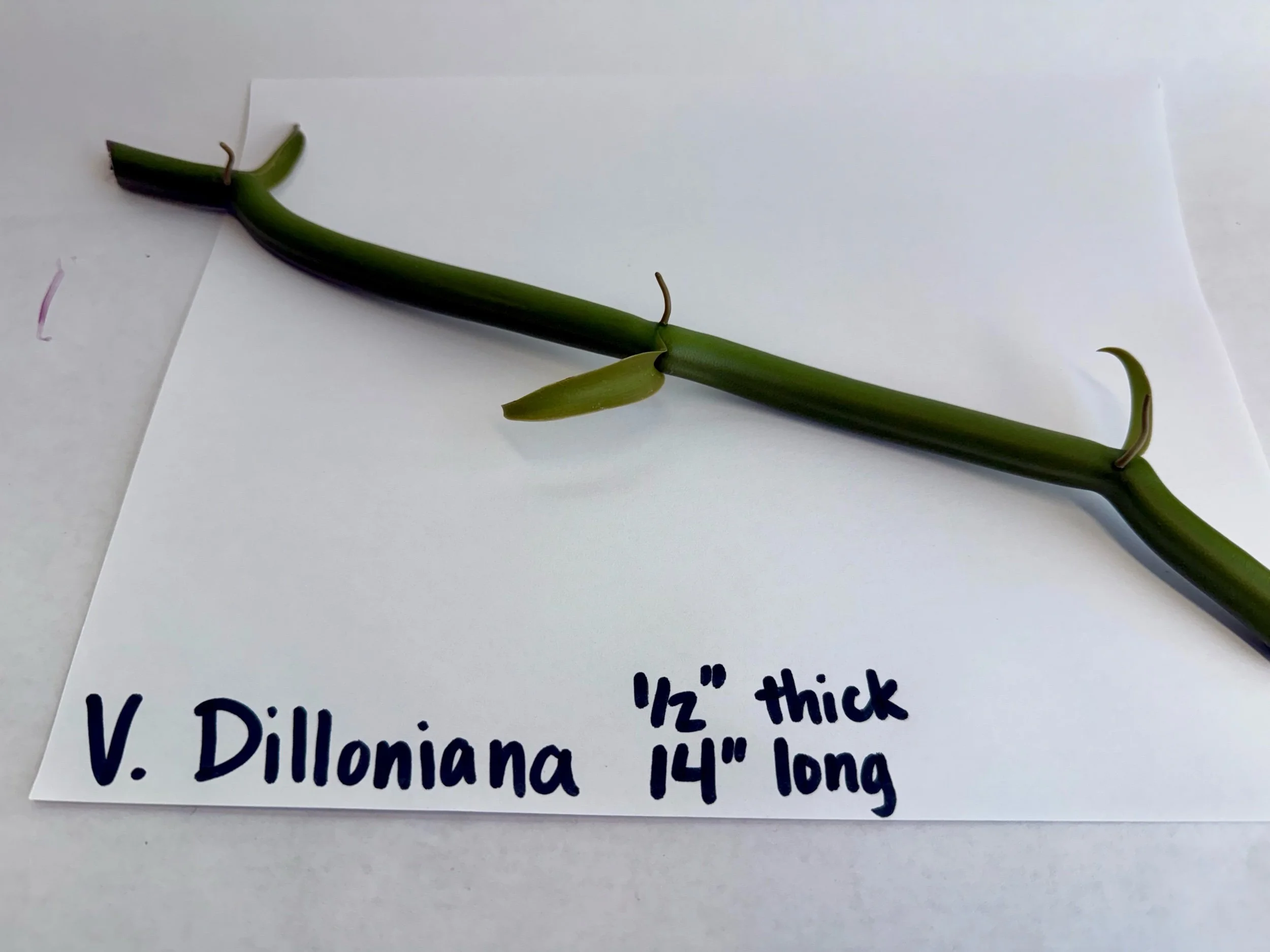 Image 2 of 2
Vanilla Dilloniana
A 3 node cutting of a Vanilla dilloniana vine.
Vanilla Dilloniana (Dillon's Vanilla)
Discover a rare piece of North American natural heritage. Vanilla dilloniana is an endangered, leafless climbing orchid that rewards patient growers with incredible structural vines and stunning, vividly colored flowers. It is the perfect centerpiece for the dedicated rare plant collector or tropical greenhouse enthusiast.
A Botanical Curiosity: Brief History
Native to the tropical hardwood hammocks, coastal berms, and limestone outcrops of South Florida and the West Indies, Vanilla dilloniana (commonly called Dillon’s Vanilla or the Leafless Vanilla Orchid) is a spectacular rarity. Like other leafless vanillas in its region, it adapted to its environment by dropping its foliage to conserve water, relying instead on its thick green stems to photosynthesize.
Tragically, due to habitat destruction and historical over-collection by poachers, this species is considered highly vulnerable across its range and endangered in Florida-in fact, wild populations in the state have at times been feared extirpated. By cultivating nursery-propagated specimens, you are helping preserve the genetics of a true botanical treasure that has captivated orchid enthusiasts for generations.
Plant Anatomy
The Vine
Vanilla dilloniana forms a multi-branched, trailing vine that can reach lengths of 15 feet or more in cultivation. Because it is entirely leafless, the robust, slightly succulent green stems do all the heavy lifting for photosynthesis. It is a hemiepiphyte, meaning it usually starts its life rooted in the ground before sending out strong aerial roots at each node to firmly grip tree bark or rocky limestone as it climbs toward the canopy.
The Flower
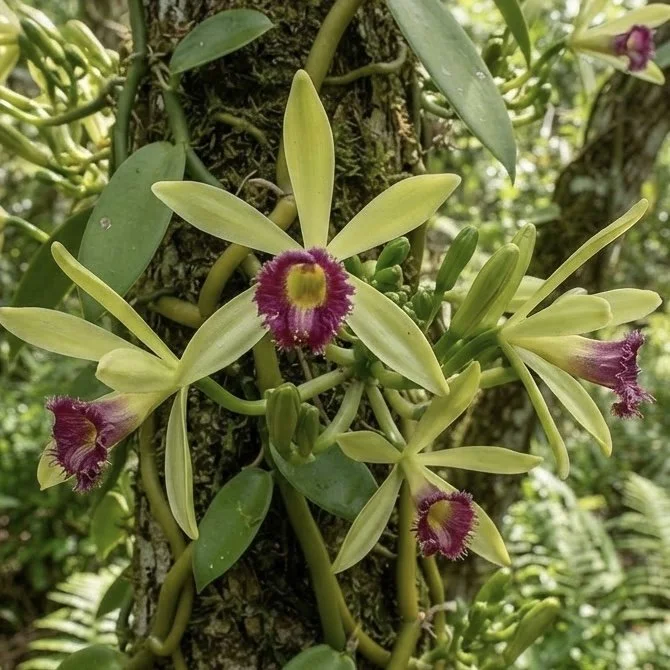
The blooms of Dillon's Vanilla are nothing short of breathtaking. Like many vanilla orchids, the flowers open in the morning and last for only a single day. The slender, elongated sepals and petals are a pale, lime green. However, the true focal point is the fluted, trumpet-shaped lip, which features a deep reddish-purple or magenta margin and a striking yellow crest in the center.
The Bean
When successfully hand-pollinated (or pollinated by native bees and hummingbirds in the wild), the ephemeral flower develops into a thick, cylindrical green seed pod. While not commercially farmed on the scale of Vanilla planifolia, the beans of V. dilloniana are highly valued by collectors and local growers for their distinct, rich, and complex aromatic flavor profile when properly cured.
Growing & Care Instructions
Because it naturally grows over limestone substrates in coastal habitats, Vanilla dilloniana has slightly different preferences than typical rainforest orchids.
Light: Provide bright, indirect or dappled sunlight. It needs strong light to trigger blooming but should be shielded from the harshest, direct midday sun.
Support (The Host): This plant will not thrive if left trailing on the ground. You must provide a sturdy, porous climbing structure. A rough-barked tree (like mahogany or oak), a thick wooden trellis, or a burlap-wrapped post works best. Gently tie the vine to the support until the aerial roots take hold.
Water & Humidity: Water generously and regularly when the plant is in active growth, but you must allow the roots and growing medium to dry out completely between waterings. Maintain high ambient humidity (ideally 70%-80%).
Potting Medium: Plant the terrestrial base in a highly aerated, fast-draining mix. An epiphytic blend of coarse redwood or orchid bark mixed with a little humus works perfectly. Because this species naturally grows over limestone, it prefers a neutral to slightly alkaline pH (around 6.6 to 7.5); adding a small amount of crushed limestone or oyster shell to the mix can be highly beneficial.
Temperature: This is a warm-weather tropical species. It thrives in temperatures between 70F and 90F. It can be grown outdoors year-round in USDA Zones 10-12 but must be protected or moved into a heated greenhouse if temperatures drop below 40F.
Fertilization: Apply a well-balanced, water-soluble orchid fertilizer at quarter or half strength every two weeks during the spring and summer.
A 3 node cutting of a Vanilla dilloniana vine.
Vanilla Dilloniana (Dillon's Vanilla)
Discover a rare piece of North American natural heritage. Vanilla dilloniana is an endangered, leafless climbing orchid that rewards patient growers with incredible structural vines and stunning, vividly colored flowers. It is the perfect centerpiece for the dedicated rare plant collector or tropical greenhouse enthusiast.
A Botanical Curiosity: Brief History
Native to the tropical hardwood hammocks, coastal berms, and limestone outcrops of South Florida and the West Indies, Vanilla dilloniana (commonly called Dillon’s Vanilla or the Leafless Vanilla Orchid) is a spectacular rarity. Like other leafless vanillas in its region, it adapted to its environment by dropping its foliage to conserve water, relying instead on its thick green stems to photosynthesize.
Tragically, due to habitat destruction and historical over-collection by poachers, this species is considered highly vulnerable across its range and endangered in Florida-in fact, wild populations in the state have at times been feared extirpated. By cultivating nursery-propagated specimens, you are helping preserve the genetics of a true botanical treasure that has captivated orchid enthusiasts for generations.
Plant Anatomy
The Vine
Vanilla dilloniana forms a multi-branched, trailing vine that can reach lengths of 15 feet or more in cultivation. Because it is entirely leafless, the robust, slightly succulent green stems do all the heavy lifting for photosynthesis. It is a hemiepiphyte, meaning it usually starts its life rooted in the ground before sending out strong aerial roots at each node to firmly grip tree bark or rocky limestone as it climbs toward the canopy.
The Flower
The blooms of Dillon's Vanilla are nothing short of breathtaking. Like many vanilla orchids, the flowers open in the morning and last for only a single day. The slender, elongated sepals and petals are a pale, lime green. However, the true focal point is the fluted, trumpet-shaped lip, which features a deep reddish-purple or magenta margin and a striking yellow crest in the center.
The Bean
When successfully hand-pollinated (or pollinated by native bees and hummingbirds in the wild), the ephemeral flower develops into a thick, cylindrical green seed pod. While not commercially farmed on the scale of Vanilla planifolia, the beans of V. dilloniana are highly valued by collectors and local growers for their distinct, rich, and complex aromatic flavor profile when properly cured.
Growing & Care Instructions
Because it naturally grows over limestone substrates in coastal habitats, Vanilla dilloniana has slightly different preferences than typical rainforest orchids.
Light: Provide bright, indirect or dappled sunlight. It needs strong light to trigger blooming but should be shielded from the harshest, direct midday sun.
Support (The Host): This plant will not thrive if left trailing on the ground. You must provide a sturdy, porous climbing structure. A rough-barked tree (like mahogany or oak), a thick wooden trellis, or a burlap-wrapped post works best. Gently tie the vine to the support until the aerial roots take hold.
Water & Humidity: Water generously and regularly when the plant is in active growth, but you must allow the roots and growing medium to dry out completely between waterings. Maintain high ambient humidity (ideally 70%-80%).
Potting Medium: Plant the terrestrial base in a highly aerated, fast-draining mix. An epiphytic blend of coarse redwood or orchid bark mixed with a little humus works perfectly. Because this species naturally grows over limestone, it prefers a neutral to slightly alkaline pH (around 6.6 to 7.5); adding a small amount of crushed limestone or oyster shell to the mix can be highly beneficial.
Temperature: This is a warm-weather tropical species. It thrives in temperatures between 70F and 90F. It can be grown outdoors year-round in USDA Zones 10-12 but must be protected or moved into a heated greenhouse if temperatures drop below 40F.
Fertilization: Apply a well-balanced, water-soluble orchid fertilizer at quarter or half strength every two weeks during the spring and summer.