 Image 1 of 1
Vanilla Karen-Christianae
A 3 node cutting of a Vanilla karen-christianae vine.
Vanilla Karen-Christianae
Add an incredibly rare, newly discovered botanical treasure to your collection. Vanilla karen-christianae is a recently described species that offers dedicated orchid growers a chance to cultivate a true marvel of modern botanical exploration. With its unique foliage and delicate, two-toned blooms, it is a magnificent centerpiece for a specialized tropical greenhouse.
A Botanical Curiosity: Brief History
Vanilla karen-christianae is a thrilling recent addition to the orchid world. It was first discovered in 2018 in the Corredores region of Costa Rica, right near the Panamanian border. The species was named in honor of the internationally recognized Costa Rican scientist and diplomat, Karen Christiana Figueres Olsen.
Initially thought to be highly restricted to a single, unprotected stretch of forest along a highway, subsequent botanical surveys have recently uncovered small, isolated populations in the humid forests of Colombia and the Brazilian Atlantic Forest. Because it is often found in vulnerable areas facing heavy agricultural development, wild populations remain highly threatened. By cultivating nursery-propagated specimens, rare plant collectors play a vital role in preserving the genetics of this remarkable, newly categorized species.
Plant Anatomy
The Vine
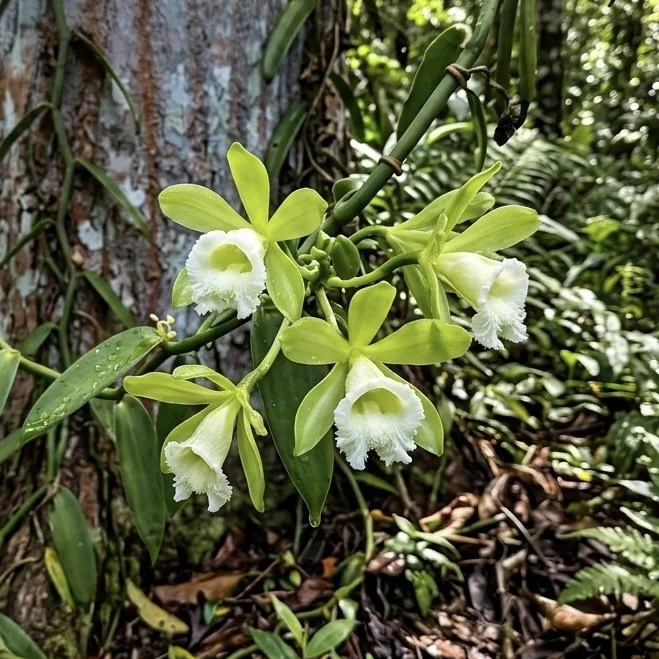
Vanilla karen-christianae is a branching, leafy, hemiepiphytic climber. It has flexible, dark olive-green stems featuring a conspicuous groove along the internodes. What makes this species easily identifiable among Central American vanillas is its highly distinct foliage. The leaves are very narrow and sword-shaped (obliquely ensiform) with a rigid, leathery texture and conspicuously recurved (curled inward) tips.
The Flower
The flowers are small, elegant, and highly distinct. They feature shiny, light green sepals and petals that frame a beautiful, tubular white lip. The lip has irregularly ruffled (crenate) margins and is decorated inside with dull yellow veins and a dense tuft of appendages (a penicillate callus). Like many vanillas, the blooms are ephemeral—opening one at a time along the raceme for just a single day. When open, they emit a pleasant, weakly citric fragrance.
The Bean
While this newly discovered species is not cultivated commercially, it belongs to the Xanata subgenus, which encompasses the fragrant vanilla species used in the global spice trade. When successfully pollinated, the ephemeral flowers yield fleshy, cylindrical green seed pods that are expected to contain fragrant, aromatic vanillin compounds when properly cured.
Growing & Care Instructions
Because it naturally grows in humid, riparian microhabitats (often near creeks or marshy areas), Vanilla karen-christianae requires a warm, deeply humid environment to thrive.
Light: Provide bright, indirect, or dappled sunlight. It naturally grows in the shaded understory and canopy margins, so avoid harsh, direct midday sun that can scorch its narrow leaves.
Support (The Host): As a climbing vine, it requires a sturdy support structure to mature. Use a rough-barked wooden post, a moss pole, or a living tree if growing outdoors in a tropical climate.
Water & Humidity: This species demands high moisture and ambient humidity. It is frequently found near water sources in the wild, so keep the growing medium consistently moist (but never waterlogged or soggy). Aim for ambient humidity levels between 75% and 85%.
Potting Medium: Plant the base in a highly aerated, fast-draining epiphytic mix. A blend of medium orchid bark, perlite, and a generous amount of sphagnum moss works well to retain necessary moisture while allowing the roots to breathe.
Temperature: This is a hot-to-warm growing tropical orchid. It thrives in temperatures between 75F and 90F. It is extremely sensitive to the cold and should be kept in a heated greenhouse or indoors if temperatures dip below 60F.
Fertilization: Apply a well-balanced, water-soluble orchid fertilizer at quarter or half strength every two weeks during the active growing season.
A 3 node cutting of a Vanilla karen-christianae vine.
Vanilla Karen-Christianae
Add an incredibly rare, newly discovered botanical treasure to your collection. Vanilla karen-christianae is a recently described species that offers dedicated orchid growers a chance to cultivate a true marvel of modern botanical exploration. With its unique foliage and delicate, two-toned blooms, it is a magnificent centerpiece for a specialized tropical greenhouse.
A Botanical Curiosity: Brief History
Vanilla karen-christianae is a thrilling recent addition to the orchid world. It was first discovered in 2018 in the Corredores region of Costa Rica, right near the Panamanian border. The species was named in honor of the internationally recognized Costa Rican scientist and diplomat, Karen Christiana Figueres Olsen.
Initially thought to be highly restricted to a single, unprotected stretch of forest along a highway, subsequent botanical surveys have recently uncovered small, isolated populations in the humid forests of Colombia and the Brazilian Atlantic Forest. Because it is often found in vulnerable areas facing heavy agricultural development, wild populations remain highly threatened. By cultivating nursery-propagated specimens, rare plant collectors play a vital role in preserving the genetics of this remarkable, newly categorized species.
Plant Anatomy
The Vine
Vanilla karen-christianae is a branching, leafy, hemiepiphytic climber. It has flexible, dark olive-green stems featuring a conspicuous groove along the internodes. What makes this species easily identifiable among Central American vanillas is its highly distinct foliage. The leaves are very narrow and sword-shaped (obliquely ensiform) with a rigid, leathery texture and conspicuously recurved (curled inward) tips.
The Flower
The flowers are small, elegant, and highly distinct. They feature shiny, light green sepals and petals that frame a beautiful, tubular white lip. The lip has irregularly ruffled (crenate) margins and is decorated inside with dull yellow veins and a dense tuft of appendages (a penicillate callus). Like many vanillas, the blooms are ephemeral—opening one at a time along the raceme for just a single day. When open, they emit a pleasant, weakly citric fragrance.
The Bean
While this newly discovered species is not cultivated commercially, it belongs to the Xanata subgenus, which encompasses the fragrant vanilla species used in the global spice trade. When successfully pollinated, the ephemeral flowers yield fleshy, cylindrical green seed pods that are expected to contain fragrant, aromatic vanillin compounds when properly cured.
Growing & Care Instructions
Because it naturally grows in humid, riparian microhabitats (often near creeks or marshy areas), Vanilla karen-christianae requires a warm, deeply humid environment to thrive.
Light: Provide bright, indirect, or dappled sunlight. It naturally grows in the shaded understory and canopy margins, so avoid harsh, direct midday sun that can scorch its narrow leaves.
Support (The Host): As a climbing vine, it requires a sturdy support structure to mature. Use a rough-barked wooden post, a moss pole, or a living tree if growing outdoors in a tropical climate.
Water & Humidity: This species demands high moisture and ambient humidity. It is frequently found near water sources in the wild, so keep the growing medium consistently moist (but never waterlogged or soggy). Aim for ambient humidity levels between 75% and 85%.
Potting Medium: Plant the base in a highly aerated, fast-draining epiphytic mix. A blend of medium orchid bark, perlite, and a generous amount of sphagnum moss works well to retain necessary moisture while allowing the roots to breathe.
Temperature: This is a hot-to-warm growing tropical orchid. It thrives in temperatures between 75F and 90F. It is extremely sensitive to the cold and should be kept in a heated greenhouse or indoors if temperatures dip below 60F.
Fertilization: Apply a well-balanced, water-soluble orchid fertilizer at quarter or half strength every two weeks during the active growing season.