 Image 1 of 2
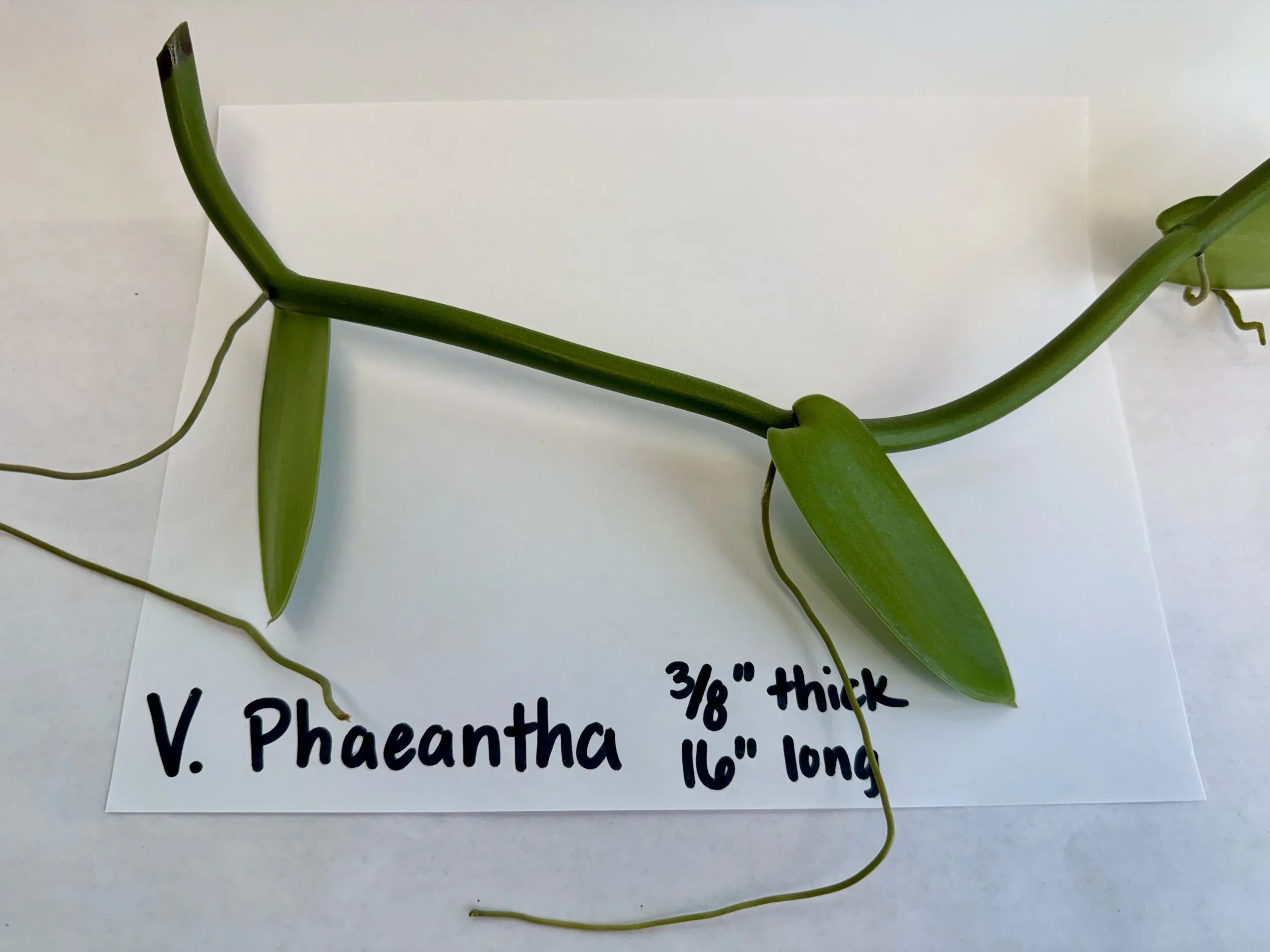 Image 2 of 2
Vanilla Phaeantha
A 3 node cutting of a Vanilla phaeantha vine.
Vanilla Phaeantha (Leafy Vanilla)
Add a vibrant piece of the tropical Americas to your collection. Vanilla phaeantha, commonly known as the Leafy Vanilla, is a rare and spectacular climbing orchid that brings lush, jungle-like energy and massive, striking blooms to any greenhouse or shaded tropical garden.
A Botanical Curiosity: Brief History
Native to a wide swath of the tropical Americas—from the cypress swamps and sloughs of South Florida through the Caribbean, Mexico, and northern South America-Vanilla phaeantha is a true jungle survivor. In Florida, it was historically found in the deep, humid canopy of the Fakahatchee Strand, though it is now listed as an endangered species in the state due to habitat loss and historical over-collecting.
Often mistaken by novices for its commercially famous cousin, Vanilla planifolia, the Leafy Vanilla stands apart with its thicker, more leathery leaves and significantly larger flowers. By cultivating nursery-propagated V. phaeantha, growers can enjoy the beauty of this wild vanilla while helping to reduce poaching pressure on vulnerable native populations.
Plant Anatomy
The Vine
Unlike the leafless, drought-adapted vanillas of the Caribbean and Florida coasts, Vanilla phaeantha is a lush, classic monopodial climber. It produces thick, fleshy, dark green stems lined with large, flat, leathery leaves that alternate along the vine. As it climbs, the plant pushes out robust aerial roots from its nodes, using them to firmly anchor itself to tree bark and absorb ambient moisture from the humid air.
The Flower
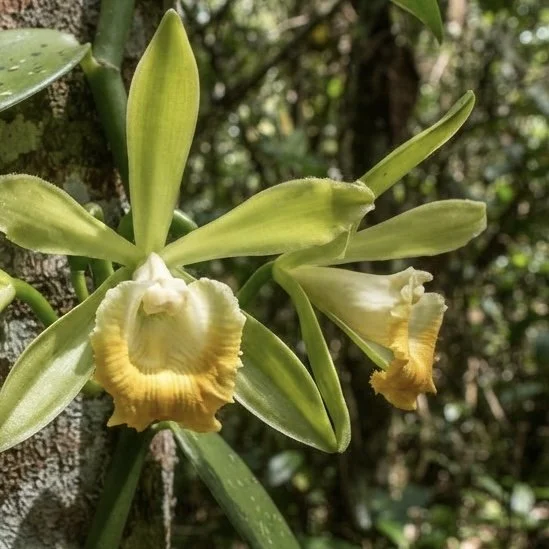
The blooms of Vanilla phaeantha are massive, often considered some of the largest in the genus, spanning up to 5 inches across. The elongated, somewhat waxy sepals and petals are a bright, pale greenish-yellow. The centerpiece is the large, tubular, ruffled lip, which is predominantly white with a striking yellow crest in the center. Inside the lip, you can often find faint, reddish-brown or purplish veins. Like most vanilla orchids, these magnificent flowers are ephemeral, opening in the early morning and fading by late afternoon.
The Bean
When successfully hand-pollinated (or visited by native euglossine bees in the wild), the flowers develop into long, fleshy, cylindrical seed pods. While they are not grown commercially on the scale of V. planifolia, the beans of Vanilla phaeantha are aromatic and possess their own unique, sweet vanillin compounds when properly dried and cured.
Growing & Care Instructions
Growing Vanilla phaeantha is highly rewarding, provided you can replicate the warm, deeply humid conditions of its native tropical sloughs and rainforests.
Light: Provide bright, filtered, or dappled sunlight. It thrives in the dappled shade of a canopy and should be protected from harsh, direct midday sun, which will quickly scorch its broad, leathery leaves.
Support (The Host): This is a vigorous climbing vine that requires substantial support to thrive and eventually bloom. Provide a sturdy wooden post wrapped in burlap or coco coir, a rough-barked tree, or a heavy-duty trellis. Tie the vine loosely until the aerial roots naturally take hold.
Water & Humidity: As a swamp and rainforest native, it demands high moisture. Keep the growing medium consistently moist during the active growing season, but never soggy. It requires high ambient humidity, ideally between 75% and 85%, to support its thick aerial roots.
Potting Medium: Plant the terrestrial base in a rich, highly aerated, fast-draining epiphytic mix. A blend of medium-to-coarse orchid bark, perlite, sphagnum moss, and high-quality humus or compost works perfectly to mimic the decaying leaf litter of the forest floor.
Temperature: This is a warm-growing tropical species. It flourishes in consistent temperatures between 70F and 90F. It can be grown outdoors year-round in USDA Zones 10b-12, but in most climates, it must be grown in a heated greenhouse or indoors during the cooler months. Protect it from temperatures below 55F.
Fertilization: Apply a well-balanced, water-soluble orchid fertilizer at half strength every one to two weeks during the active spring and summer growing seasons to fuel its rapid vine growth.
A 3 node cutting of a Vanilla phaeantha vine.
Vanilla Phaeantha (Leafy Vanilla)
Add a vibrant piece of the tropical Americas to your collection. Vanilla phaeantha, commonly known as the Leafy Vanilla, is a rare and spectacular climbing orchid that brings lush, jungle-like energy and massive, striking blooms to any greenhouse or shaded tropical garden.
A Botanical Curiosity: Brief History
Native to a wide swath of the tropical Americas—from the cypress swamps and sloughs of South Florida through the Caribbean, Mexico, and northern South America-Vanilla phaeantha is a true jungle survivor. In Florida, it was historically found in the deep, humid canopy of the Fakahatchee Strand, though it is now listed as an endangered species in the state due to habitat loss and historical over-collecting.
Often mistaken by novices for its commercially famous cousin, Vanilla planifolia, the Leafy Vanilla stands apart with its thicker, more leathery leaves and significantly larger flowers. By cultivating nursery-propagated V. phaeantha, growers can enjoy the beauty of this wild vanilla while helping to reduce poaching pressure on vulnerable native populations.
Plant Anatomy
The Vine
Unlike the leafless, drought-adapted vanillas of the Caribbean and Florida coasts, Vanilla phaeantha is a lush, classic monopodial climber. It produces thick, fleshy, dark green stems lined with large, flat, leathery leaves that alternate along the vine. As it climbs, the plant pushes out robust aerial roots from its nodes, using them to firmly anchor itself to tree bark and absorb ambient moisture from the humid air.
The Flower
The blooms of Vanilla phaeantha are massive, often considered some of the largest in the genus, spanning up to 5 inches across. The elongated, somewhat waxy sepals and petals are a bright, pale greenish-yellow. The centerpiece is the large, tubular, ruffled lip, which is predominantly white with a striking yellow crest in the center. Inside the lip, you can often find faint, reddish-brown or purplish veins. Like most vanilla orchids, these magnificent flowers are ephemeral, opening in the early morning and fading by late afternoon.
The Bean
When successfully hand-pollinated (or visited by native euglossine bees in the wild), the flowers develop into long, fleshy, cylindrical seed pods. While they are not grown commercially on the scale of V. planifolia, the beans of Vanilla phaeantha are aromatic and possess their own unique, sweet vanillin compounds when properly dried and cured.
Growing & Care Instructions
Growing Vanilla phaeantha is highly rewarding, provided you can replicate the warm, deeply humid conditions of its native tropical sloughs and rainforests.
Light: Provide bright, filtered, or dappled sunlight. It thrives in the dappled shade of a canopy and should be protected from harsh, direct midday sun, which will quickly scorch its broad, leathery leaves.
Support (The Host): This is a vigorous climbing vine that requires substantial support to thrive and eventually bloom. Provide a sturdy wooden post wrapped in burlap or coco coir, a rough-barked tree, or a heavy-duty trellis. Tie the vine loosely until the aerial roots naturally take hold.
Water & Humidity: As a swamp and rainforest native, it demands high moisture. Keep the growing medium consistently moist during the active growing season, but never soggy. It requires high ambient humidity, ideally between 75% and 85%, to support its thick aerial roots.
Potting Medium: Plant the terrestrial base in a rich, highly aerated, fast-draining epiphytic mix. A blend of medium-to-coarse orchid bark, perlite, sphagnum moss, and high-quality humus or compost works perfectly to mimic the decaying leaf litter of the forest floor.
Temperature: This is a warm-growing tropical species. It flourishes in consistent temperatures between 70F and 90F. It can be grown outdoors year-round in USDA Zones 10b-12, but in most climates, it must be grown in a heated greenhouse or indoors during the cooler months. Protect it from temperatures below 55F.
Fertilization: Apply a well-balanced, water-soluble orchid fertilizer at half strength every one to two weeks during the active spring and summer growing seasons to fuel its rapid vine growth.