 Image 1 of 1
Vanilla Imperialis
A 3 node cutting of a Vanilla imperialis vine.
Vanilla Imperialis (Imperial Vanilla)
Make a massive statement in your greenhouse or tropical garden. Vanilla imperialis is the undisputed giant of the vanilla genus. With huge, architectural leaves and some of the most spectacular, richly colored blooms in the entire orchid family, this African species is a must-have for the serious collector with space to spare.
A Botanical Curiosity: Brief History
Native to the dense, tropical rainforests of Sub-Saharan and West-Central Africa-spanning countries like Ivory Coast, Cameroon, Congo, and Uganda. Vanilla imperialis was first scientifically described in the late 19th century. Its species name, imperialis (meaning "imperial" or "emperor"), was aptly chosen to reflect its colossal proportions.
While local populations have occasionally utilized its aromatic seed pods, its sheer size, vigorous growth rate, and structural requirements have historically kept it out of commercial spice plantations. Today, it remains a highly sought-after rarity prized by botanical gardens and dedicated private collectors for its awe-inspiring aesthetic rather than culinary production.
Plant Anatomy
The Vine
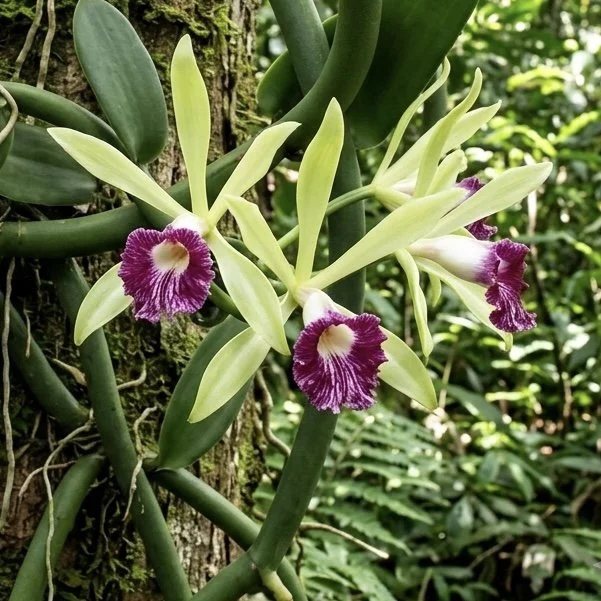
The vine of Vanilla imperialis is an absolute behemoth. Unlike the leafless Caribbean species, this orchid boasts enormous, broad, leathery dark green leaves that can measure up to 10 inches (25 cm) long and 6 inches (15 cm) wide. The climbing stems themselves are remarkably thick, fleshy, and deeply channeled. At every node, the plant produces robust aerial roots designed to firmly anchor the heavy vine to tree trunks as it climbs high into the African forest canopy.
The Flower
The blooms are widely considered the most beautiful of all vanilla orchids. Measuring up to 6 inches across, the elongated sepals and petals are a pale, creamy yellowish-green. The breathtaking centerpiece is its massive, funnel-shaped lip, which is heavily ruffled and vividly marked with deep magenta, crimson, or purple veins. The flowers open successively along the raceme; while each individual bloom only lasts a day or two, a large, mature inflorescence can produce flowers for several weeks.
The Bean
Once successfully pollinated, the flowers yield enormous, cylindrical seed pods that match the plant's oversized proportions, often reaching 6 to 10 inches in length. While not commercially farmed to compete with Vanilla planifolia, these gigantic beans do contain vanillin. When properly dried and cured, they produce a sweet, distinctly fragrant aroma.
Growing & Care Instructions
Because of its massive size and vigorous growth habit, Vanilla imperialis requires ample space and heavy-duty support to truly thrive.
Light: Provide bright, filtered, or dappled sunlight. It enjoys strong indirect light, which is necessary to encourage blooming, but its broad leaves will scorch if exposed to harsh, direct midday sun.
Support (The Host): This plant is incredibly heavy once mature. Flimsy trellises will not work. Provide a very strong, heavy-duty support structure such as a thick hardwood post, a concrete pillar wrapped in coco coir, or plant it at the base of a large, sturdy shade tree.
Water & Humidity: As a true rainforest native, it loves water. Keep the growing medium consistently moist (but not soggy) during active growth. Maintain very high ambient humidity, ideally between 75% and 90%.
Potting Medium: Plant the terrestrial base in a rich, highly aerated, fast-draining epiphytic mix. A blend of coarse orchid bark, perlite, sphagnum moss, and high-quality compost or humus works best to provide both nutrients and vital root airflow.
Temperature: This is a warm-to-hot growing tropical species that absolutely resents the cold. It thrives in temperatures between 70°F and 90F. It can be grown outdoors year-round in USDA Zones 11-12, but in most climates, it must be grown in a large, heated greenhouse. Do not expose it to temperatures below 50F.
Fertilization: Vanilla imperialis is a heavy feeder due to its rapid, massive growth. Apply a balanced, water-soluble orchid fertilizer at half strength weekly during the active spring and summer growing seasons.
A 3 node cutting of a Vanilla imperialis vine.
Vanilla Imperialis (Imperial Vanilla)
Make a massive statement in your greenhouse or tropical garden. Vanilla imperialis is the undisputed giant of the vanilla genus. With huge, architectural leaves and some of the most spectacular, richly colored blooms in the entire orchid family, this African species is a must-have for the serious collector with space to spare.
A Botanical Curiosity: Brief History
Native to the dense, tropical rainforests of Sub-Saharan and West-Central Africa-spanning countries like Ivory Coast, Cameroon, Congo, and Uganda. Vanilla imperialis was first scientifically described in the late 19th century. Its species name, imperialis (meaning "imperial" or "emperor"), was aptly chosen to reflect its colossal proportions.
While local populations have occasionally utilized its aromatic seed pods, its sheer size, vigorous growth rate, and structural requirements have historically kept it out of commercial spice plantations. Today, it remains a highly sought-after rarity prized by botanical gardens and dedicated private collectors for its awe-inspiring aesthetic rather than culinary production.
Plant Anatomy
The Vine
The vine of Vanilla imperialis is an absolute behemoth. Unlike the leafless Caribbean species, this orchid boasts enormous, broad, leathery dark green leaves that can measure up to 10 inches (25 cm) long and 6 inches (15 cm) wide. The climbing stems themselves are remarkably thick, fleshy, and deeply channeled. At every node, the plant produces robust aerial roots designed to firmly anchor the heavy vine to tree trunks as it climbs high into the African forest canopy.
The Flower
The blooms are widely considered the most beautiful of all vanilla orchids. Measuring up to 6 inches across, the elongated sepals and petals are a pale, creamy yellowish-green. The breathtaking centerpiece is its massive, funnel-shaped lip, which is heavily ruffled and vividly marked with deep magenta, crimson, or purple veins. The flowers open successively along the raceme; while each individual bloom only lasts a day or two, a large, mature inflorescence can produce flowers for several weeks.
The Bean
Once successfully pollinated, the flowers yield enormous, cylindrical seed pods that match the plant's oversized proportions, often reaching 6 to 10 inches in length. While not commercially farmed to compete with Vanilla planifolia, these gigantic beans do contain vanillin. When properly dried and cured, they produce a sweet, distinctly fragrant aroma.
Growing & Care Instructions
Because of its massive size and vigorous growth habit, Vanilla imperialis requires ample space and heavy-duty support to truly thrive.
Light: Provide bright, filtered, or dappled sunlight. It enjoys strong indirect light, which is necessary to encourage blooming, but its broad leaves will scorch if exposed to harsh, direct midday sun.
Support (The Host): This plant is incredibly heavy once mature. Flimsy trellises will not work. Provide a very strong, heavy-duty support structure such as a thick hardwood post, a concrete pillar wrapped in coco coir, or plant it at the base of a large, sturdy shade tree.
Water & Humidity: As a true rainforest native, it loves water. Keep the growing medium consistently moist (but not soggy) during active growth. Maintain very high ambient humidity, ideally between 75% and 90%.
Potting Medium: Plant the terrestrial base in a rich, highly aerated, fast-draining epiphytic mix. A blend of coarse orchid bark, perlite, sphagnum moss, and high-quality compost or humus works best to provide both nutrients and vital root airflow.
Temperature: This is a warm-to-hot growing tropical species that absolutely resents the cold. It thrives in temperatures between 70°F and 90F. It can be grown outdoors year-round in USDA Zones 11-12, but in most climates, it must be grown in a large, heated greenhouse. Do not expose it to temperatures below 50F.
Fertilization: Vanilla imperialis is a heavy feeder due to its rapid, massive growth. Apply a balanced, water-soluble orchid fertilizer at half strength weekly during the active spring and summer growing seasons.