 Image 1 of 1
Vanilla Insignis
A 3 node cutting of a Vanilla insignis vine.
Vanilla Insignis (Remarkable Vanilla Orchid)
Bring a living piece of Mesoamerican history into your collection. Vanilla insignis-aptly named for its remarkable, showy blooms-is a breathtaking climbing orchid that offers both historical intrigue and spectacular floral displays.
A Botanical Curiosity: Brief History
Native to the lowland tropical forests of Mesoamerica, spanning from Southern Mexico through Guatemala, Belize, and Honduras, Vanilla insignis is deeply entwined with the region's rich cultural history. Long before Europeans arrived in the Americas, indigenous populations, including the Classic Maya, likely interacted with and utilized this wild vanilla alongside its more famous cousin, Vanilla planifolia.
While V. planifolia ultimately dominated the global spice trade, V. insignis remained a hidden gem of the Mesoamerican jungles. Today, it is highly sought after by orchid collectors and botanical enthusiasts who want to preserve the genetic diversity of wild vanillas while enjoying one of the most intricately detailed flowers in the entire genus.
Plant Anatomy
The Vine
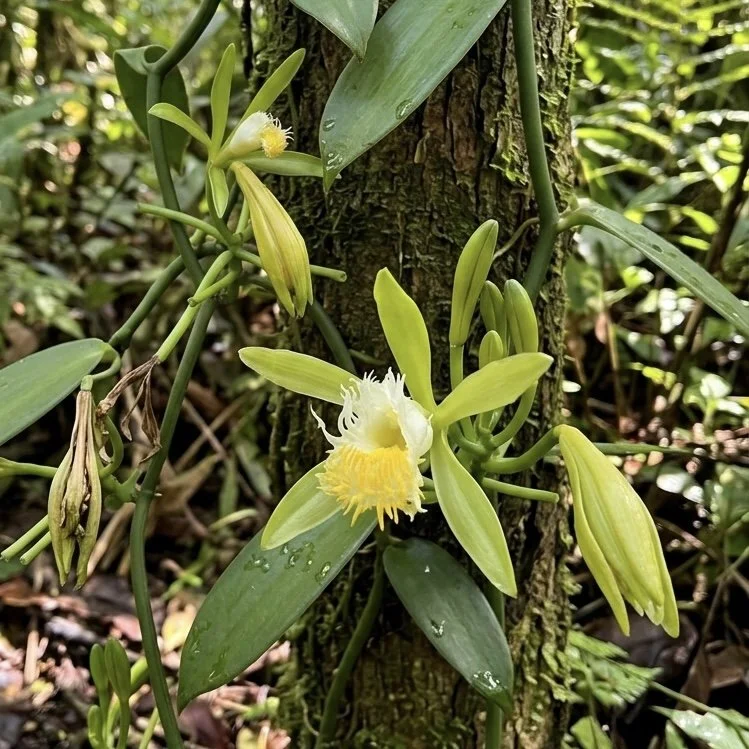
Unlike the leafless desert-adapted vanillas, Vanilla insignis is a classic, lush tropical climber. It features thick, fleshy, monopodial stems lined with broad, flat, leathery dark green leaves. At each node along the stem, the plant produces strong aerial roots designed to anchor the heavy vine to the rough bark of canopy trees as it reaches upward toward the filtered forest light.
The Flower
The blooms of Vanilla insignis are true showstoppers. The flower features large, pale greenish-yellow sepals and petals that frame an incredibly complex, tubular lip. This wide, ruffled lip is predominantly white but is distinctly marked by a central crest of fleshy yellow bristles or papillae. Like most vanillas, these magnificent flowers are ephemeral, opening early in the morning and lasting for only a single day (typically 8 to 14 hours) before closing forever.
The Bean
When successfully pollinated, the flowers produce elongated, fleshy, cylindrical seed pods. While not cultivated on an industrial scale like commercial vanilla, the beans of Vanilla insignis do contain fragrant compounds and have been used historically by local populations as a sweet, aromatic flavoring.
Growing & Care Instructions
Growing Vanilla insignis requires replicating the warm, humid environment of a Mesoamerican rainforest. Given time and space, it is a vigorous and rewarding grower.
Light: Provide bright, filtered, or dappled sunlight. It needs sufficient light to trigger blooming once mature but must be protected from harsh, direct midday sun, which can scorch its broad leaves.
Support (The Host): As a heavy, climbing vine, it requires substantial support. Use a sturdy wooden stake, a rough-barked tree fern totem, or train it up a textured tree in tropical climates. You will need to tie the vine loosely until the aerial roots naturally anchor themselves.
Water & Humidity: This species thrives on moisture. Water thoroughly and regularly during the active growing season, allowing only the top of the potting medium to dry out between waterings. Maintain high ambient humidity, ideally between 70% and 80%.
Potting Medium: Start the terrestrial base in a rich, highly aerated, fast-draining epiphytic mix. A blend of coarse orchid bark, perlite, and a little high-quality humus or sphagnum moss works best to provide both nutrients and essential airflow to the roots.
Temperature: Vanilla insignis is a warm-growing tropical species. It prefers consistent temperatures between 70F and 90F. It can be grown outdoors year-round only in USDA Zones 11-12; otherwise, it should be kept in a bright, heated greenhouse or indoors during cooler months. Protect it from temperatures below 55F.
Fertilization: Apply a well-balanced, water-soluble orchid fertilizer at half strength every one to two weeks during the spring and summer to support its rapid vine growth.
A 3 node cutting of a Vanilla insignis vine.
Vanilla Insignis (Remarkable Vanilla Orchid)
Bring a living piece of Mesoamerican history into your collection. Vanilla insignis-aptly named for its remarkable, showy blooms-is a breathtaking climbing orchid that offers both historical intrigue and spectacular floral displays.
A Botanical Curiosity: Brief History
Native to the lowland tropical forests of Mesoamerica, spanning from Southern Mexico through Guatemala, Belize, and Honduras, Vanilla insignis is deeply entwined with the region's rich cultural history. Long before Europeans arrived in the Americas, indigenous populations, including the Classic Maya, likely interacted with and utilized this wild vanilla alongside its more famous cousin, Vanilla planifolia.
While V. planifolia ultimately dominated the global spice trade, V. insignis remained a hidden gem of the Mesoamerican jungles. Today, it is highly sought after by orchid collectors and botanical enthusiasts who want to preserve the genetic diversity of wild vanillas while enjoying one of the most intricately detailed flowers in the entire genus.
Plant Anatomy
The Vine
Unlike the leafless desert-adapted vanillas, Vanilla insignis is a classic, lush tropical climber. It features thick, fleshy, monopodial stems lined with broad, flat, leathery dark green leaves. At each node along the stem, the plant produces strong aerial roots designed to anchor the heavy vine to the rough bark of canopy trees as it reaches upward toward the filtered forest light.
The Flower
The blooms of Vanilla insignis are true showstoppers. The flower features large, pale greenish-yellow sepals and petals that frame an incredibly complex, tubular lip. This wide, ruffled lip is predominantly white but is distinctly marked by a central crest of fleshy yellow bristles or papillae. Like most vanillas, these magnificent flowers are ephemeral, opening early in the morning and lasting for only a single day (typically 8 to 14 hours) before closing forever.
The Bean
When successfully pollinated, the flowers produce elongated, fleshy, cylindrical seed pods. While not cultivated on an industrial scale like commercial vanilla, the beans of Vanilla insignis do contain fragrant compounds and have been used historically by local populations as a sweet, aromatic flavoring.
Growing & Care Instructions
Growing Vanilla insignis requires replicating the warm, humid environment of a Mesoamerican rainforest. Given time and space, it is a vigorous and rewarding grower.
Light: Provide bright, filtered, or dappled sunlight. It needs sufficient light to trigger blooming once mature but must be protected from harsh, direct midday sun, which can scorch its broad leaves.
Support (The Host): As a heavy, climbing vine, it requires substantial support. Use a sturdy wooden stake, a rough-barked tree fern totem, or train it up a textured tree in tropical climates. You will need to tie the vine loosely until the aerial roots naturally anchor themselves.
Water & Humidity: This species thrives on moisture. Water thoroughly and regularly during the active growing season, allowing only the top of the potting medium to dry out between waterings. Maintain high ambient humidity, ideally between 70% and 80%.
Potting Medium: Start the terrestrial base in a rich, highly aerated, fast-draining epiphytic mix. A blend of coarse orchid bark, perlite, and a little high-quality humus or sphagnum moss works best to provide both nutrients and essential airflow to the roots.
Temperature: Vanilla insignis is a warm-growing tropical species. It prefers consistent temperatures between 70F and 90F. It can be grown outdoors year-round only in USDA Zones 11-12; otherwise, it should be kept in a bright, heated greenhouse or indoors during cooler months. Protect it from temperatures below 55F.
Fertilization: Apply a well-balanced, water-soluble orchid fertilizer at half strength every one to two weeks during the spring and summer to support its rapid vine growth.